


So my mom and I finally had a chance to go into the garage and find the box of recipes! I had imagined myself as a sort of artifact savior, pulling their loose pages from a damp, dark corner covered in spiderwebs. But they were just tucked up on a shelf in a regular cardboard storage box.
Inside the box were two recipe card boxes, one made of metal, the other made of plastic. Then there were several piles of recipe cards that were loose and not stored in a separate box or book. There were also several notebooks and recipe books. Everything was pretty well preserved, as far as I could tell. I think staying in a dark, enclosed box in the garage actually helped the papers by keeping them out of the light. Light is pretty bad for paper records, accelerating the process of fading and yellowing. A lot of damage from moisture or pests can be repaired or even reversed with time and resources, but in archival school, light was stressed as one of the worst things to cause damage to records. So being in a box, off of the floor on a shelf was actually really good for these papers!
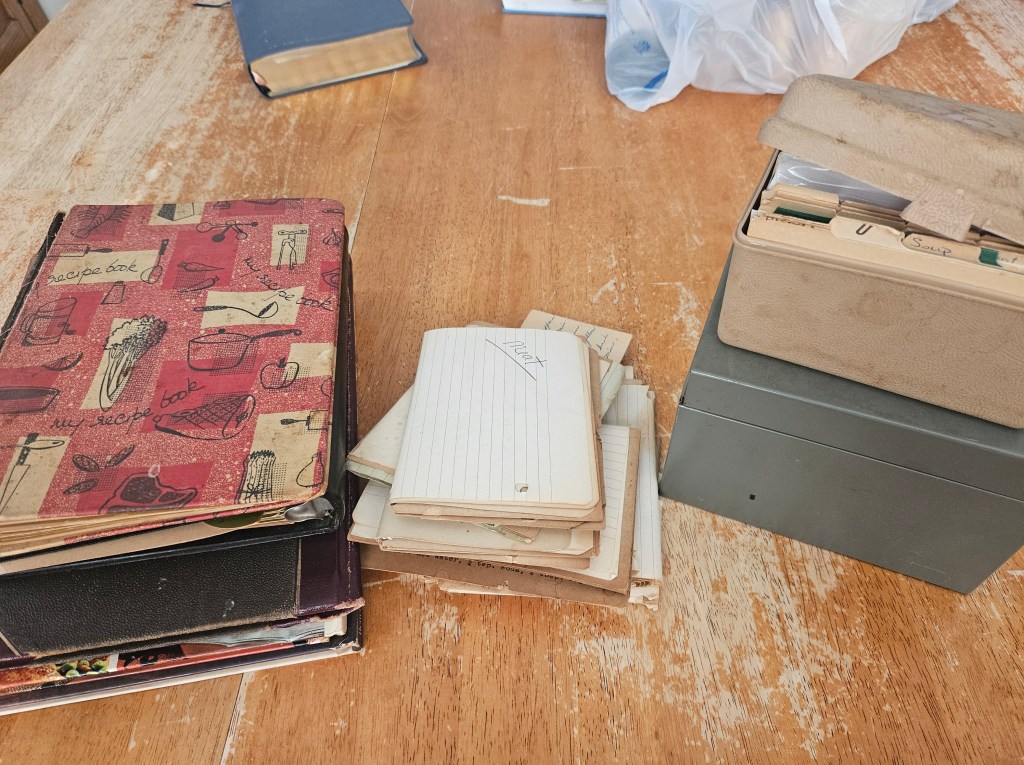
My mom has had this collection of recipes for ten years or so, and has done a bit of organizing on her own, especially with the loose pages. She had divided them into categories, like bread, cookies, pies, and had wrapped them with a separate piece of paper. These are only ones I have really looked through so far.
I also opened the metal recipe box. It only had about ten recipes in it, and the rest of the index cards had Bible verses and Bible study notes on them. I’ll probably try to take some pictures of these as we may not be saving them. That’s one of the great debates of archives work- what is worth saving, and what can be gotten rid of? Our inclination is to save and preserve as much as possible, especially when building a family archive. But could we really, practically, save everything? Saving every scrap of paper, every notecard, would eventually become a Herculean task, which storage space quickly running out.
To me, saving the recipes is more important because they show what cooking was like fifty or more years ago, what people were eating, and how their culture and environment shaped their cooking and eating. And cooking a recipe from the past brings the past sharply to life. The Bible study notes, while interesting, don’t hold quite the same weight, at least for my family archives.
My main next step for these recipes is to get a better storage box for them and sort them out further. I’ll probably be buying storage supplies from Gaylord Archival. They sell a lot of storage boxes and preservation kits for museums and archives, and their prices and what they sell make high quality archival storage materials a lot more accessible for an average consumer. I’m not endorsed by them or anything, but I learned about them in library school, and they seem like a good company with good products. Here is a link to their site if you are interested!
https://www.gaylord.com/?site=gaylord
Once the recipes are more organized and stored properly, I’ll start the work of photographing them, transcribing them, and testing some of them out! I’ve already seen a couple I’m interested in trying, such as Waldorf Salad Cookies.
Until next time!
~Muriel

Leave a Reply